Are You a Morning Lark or a Night Owl? How Understanding Your Chronotype Can Enhance Aging
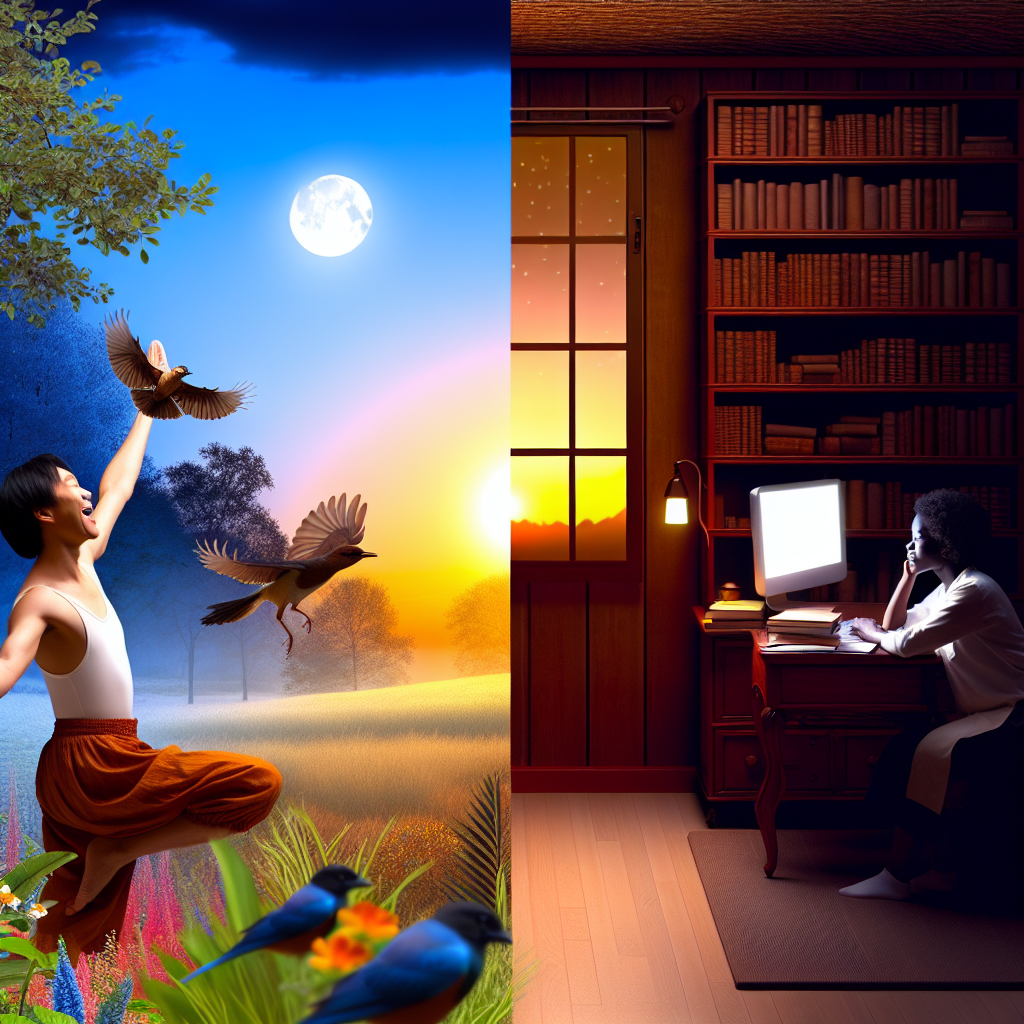
Do you leap out of bed at the first chirp of your alarm, or do you hit snooze until the last possible second? Believe it or not, this behavior says a lot about you and your chronotype – whether you’re a morning lark or a night owl. As we age, tuning into these natural rhythms might just be the key to improving our health and vitality. Let’s dive into how these internal clocks influence our lives and how we can adjust them to tick in our favor as we grow older.
Decoding Chronotypes
What’s Your Chronotype?
Chronotypes categorize us based on our peak alertness hours. Morning larks catch the worm with ease in the early hours, while night owls find their groove as the sun sets. There are also intermediate types who adapt flexibly, and variable types, who show no clear pattern. Identifying your type can be the first step towards syncing your lifestyle with your biological clock.
The Science Behind Chronotypes
Our chronotypes are shaped by genetics and how our brains react to light, regulating our circadian rhythms. These rhythms dictate not just when we sleep but also affect hormone levels, eating habits, and even body temperature.
Chronotypes and the Aging Process
Shifting Sands – How Chronotypes Change with Age
Research indicates that as we grow older, there’s a common shift towards morningness. This change can be attributed to alterations in brain structures that regulate our circadian rhythms. Understanding and adapting to these shifts can significantly enhance sleep quality and general well-being.
The Impact on Health and Wellness
Lifestyle alignment with our chronotype can lead to improved metabolic health, mood, and cognitive function. Conversely, misalignment may contribute to a range of health issues, including sleep disorders and poorer mental health.
Adapting for Better Health
Tailoring Your Day to Fit Your Chronotype
Harmonizing your daily routine with your chronotype can boost both productivity and health. Here are some tips:
- Morning larks might tackle important tasks early and start winding down as evening approaches.
- Night owls could optimize their schedule by planning demanding activities during their peak hours in the afternoon or evening.
Sleep Hygiene for Different Chronotypes
Adapting sleep hygiene practices to suit your chronotype can profoundly improve sleep quality:
- Morning larks should maximize exposure to morning sunlight and minimize evening light.
- Night owls might manage light exposure more carefully, dimming lights earlier to encourage an earlier bedtime.
Current Trends and Future Directions
Chronotypes in the Spotlight
Interest in chronobiology is blossoming, influencing fields from workplace productivity to personalized medicine. This growing body of research promises more tailored approaches to healthcare and wellness, especially for the aging population.
Conclusion
Whether you’re energized by dawn or dusk, understanding and embracing your natural sleep-wake pattern can have profound effects on your health as you age. By aligning your daily activities with your chronotype, you can not only optimize your body’s rhythms but also enhance your mood and metabolic health.
Why not let your internal clock set the pace? Embark on a one-week “Chronotype Challenge”: adjust your schedule to align with your natural rhythm and observe the changes. How will this simple shift enhance your daily energy, mood, and overall vitality? Let’s find the rhythm that resonates with our life’s tempo!